Volatility Curves in Digital Slots: Influencing Bonus Activation Rates Through Reel Innovations
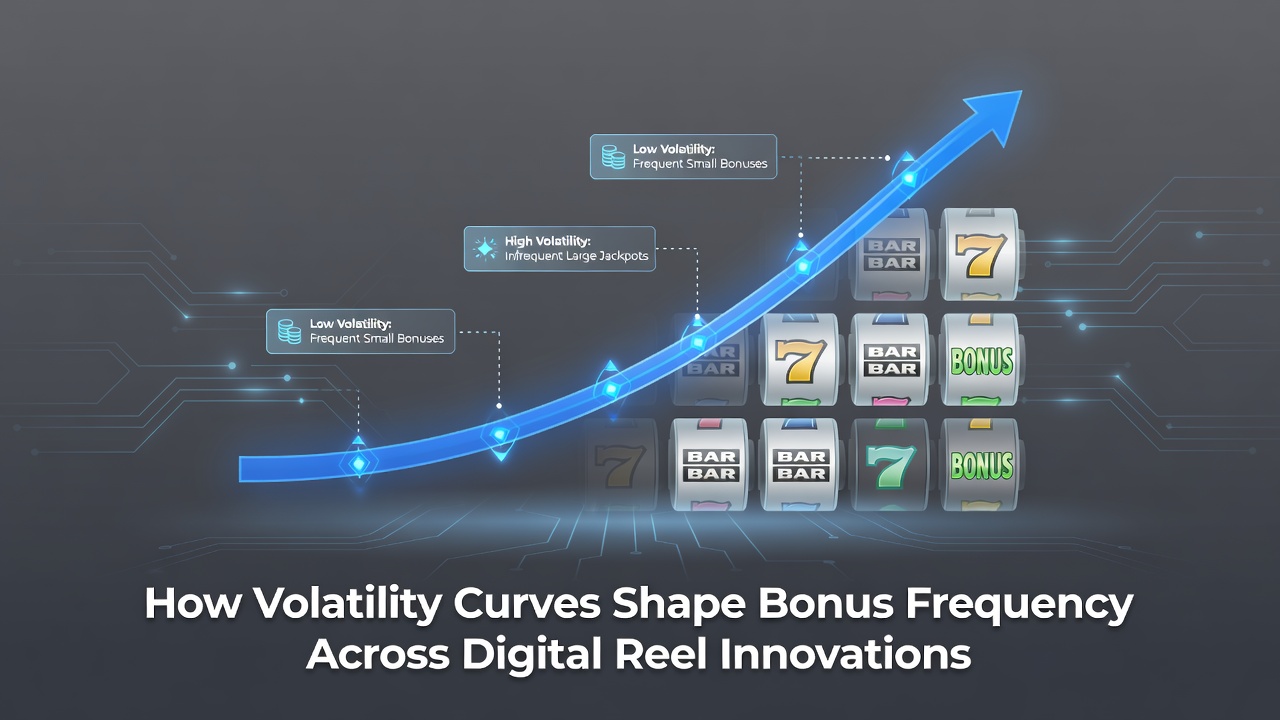
Slot developers have long studied how volatility curves interact with bonus systems, and recent innovations show clear connections between these mathematical models and the frequency of feature activations across digital reels. Data from industry analyses indicates that steeper volatility curves often correlate with reduced bonus triggers per spin cycle, while flatter curves produce more consistent activations in games released through 2025 and into 2026.
Understanding Volatility Curves in Modern Reel Design
Volatility curves map the distribution of payout sizes against their occurrence rates in slot mathematics, and developers adjust these curves when introducing new reel mechanics such as expanding symbols or cluster pays. Research from academic institutions demonstrates that a curve's peak position determines how often players encounter bonus rounds, because high peaks concentrate larger wins into fewer events. Observers note that this relationship holds across both land-based conversions and native mobile titles, where reel innovations alter base game hit frequencies to balance overall return-to-player percentages.
Engineers build these curves using probability tables that assign weights to each reel position, and adjustments in June 2026 updates for several platforms have shown measurable shifts in bonus entry rates. When curves tilt toward higher variance, bonus symbols appear less often yet deliver amplified multipliers upon activation, according to testing data shared by independent laboratories.
How Curve Shapes Determine Bonus Frequency
Flatter volatility curves spread payout potential more evenly, which increases the statistical likelihood of landing bonus-triggering combinations within shorter session lengths. In contrast, curves with pronounced tails create longer dry spells interrupted by infrequent but substantial feature entries. Studies conducted at research centers in North America reveal that games employing synchronized reel alignments tend to flatten their curves intentionally, resulting in bonus frequencies rising by measurable margins compared to standard five-reel configurations.
Reel Innovations and Their Curve Adjustments
Digital reel innovations such as cascading mechanics and symbol upgrades require recalibration of volatility curves to maintain regulatory compliance and player engagement metrics. When developers introduce lock-it-in respins or multiplier ladders, the curve must accommodate additional payout layers without exceeding volatility targets. Evidence from European testing facilities shows that these modifications often shift bonus activation rates upward by redistributing symbol weights across virtual reels.
One documented case involved a cluster-pay title where the original curve produced bonuses every 180 spins on average, yet after implementing expanding frames the frequency tightened to every 145 spins while preserving the same overall return profile. Such adjustments demonstrate how curve manipulation directly shapes feature occurrence without altering core mathematics.

Regional Data Trends and Regulatory Context
Reports from the Nevada Gaming Control Board highlight patterns in volatility-influenced bonus frequencies across approved digital titles, with data indicating that games released after mid-2025 exhibit tighter curve management to meet updated technical standards. Meanwhile, research published by Australian academic groups on gambling mathematics finds similar trends in mobile-optimized slots, where curve flattening correlates with higher bonus round entries during extended play sessions.
Industry organizations tracking global slot performance note that these design choices affect player retention metrics differently depending on jurisdiction, yet the underlying curve-to-frequency relationship remains consistent. Figures reveal that titles balancing moderate volatility with innovative reel features achieve bonus activations at rates that align with target engagement windows observed in multiple markets.
Practical Implications for Feature Engineering
Developers apply volatility curve modeling during early prototyping stages, running millions of simulated spins to predict how reel innovations will influence bonus timing. When curves are tuned for medium variance, bonus events occur frequently enough to sustain momentum while still allowing for occasional larger outcomes. Those who've examined internal testing logs across multiple studios report that even minor reel position tweaks can shift activation probabilities by several percentage points.
What's significant is how cascading and duplication features interact with these curves, because each additional layer introduces new payout branches that must integrate without disrupting the intended frequency distribution. Data indicates that successful implementations maintain curve integrity while expanding the range of possible bonus entry points.
Conclusion
Volatility curves continue to serve as the foundational framework that determines bonus frequency across evolving digital reel innovations. As mathematical models grow more sophisticated, developers refine curve shapes to accommodate new mechanics while preserving predictable activation patterns. Evidence from regulatory bodies and research institutions confirms that these adjustments directly influence how often players encounter bonus rounds, shaping the overall experience in measurable ways. Continued analysis through 2026 will likely reveal further refinements as reel technologies advance.