Cluster Mechanics and Multiplier Amplification in Contemporary Slot Designs
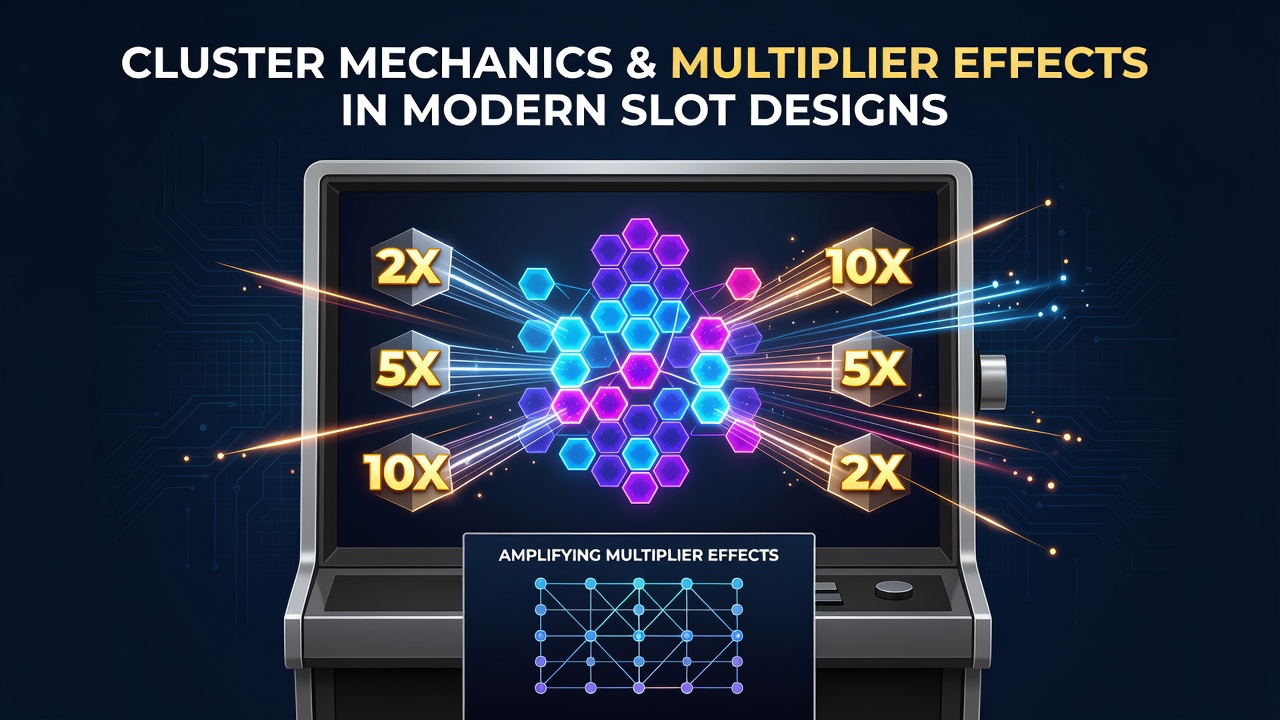
Cluster mechanics have reshaped how symbols interact on digital reels since their introduction in several high-profile titles around 2016, replacing traditional paylines with adjacent symbol groups that trigger payouts when they reach minimum sizes. These systems allow wins to form through connected blocks rather than fixed lines, and developers integrate them with multiplier features to increase payout potential across multiple consecutive events.
Core Principles of Cluster Formation
Symbols in cluster-based slots must touch horizontally or vertically to create a valid group, with larger clusters generating higher base returns before any multipliers apply. Game engines track these connections in real time, removing matched symbols and allowing new ones to drop or cascade into place, which extends sequences without requiring additional spins. Data from industry reports show that titles using this format often record higher average spin durations compared to payline equivalents, because each cascade round keeps the reels active until no further clusters appear.
Integration With Multiplier Systems
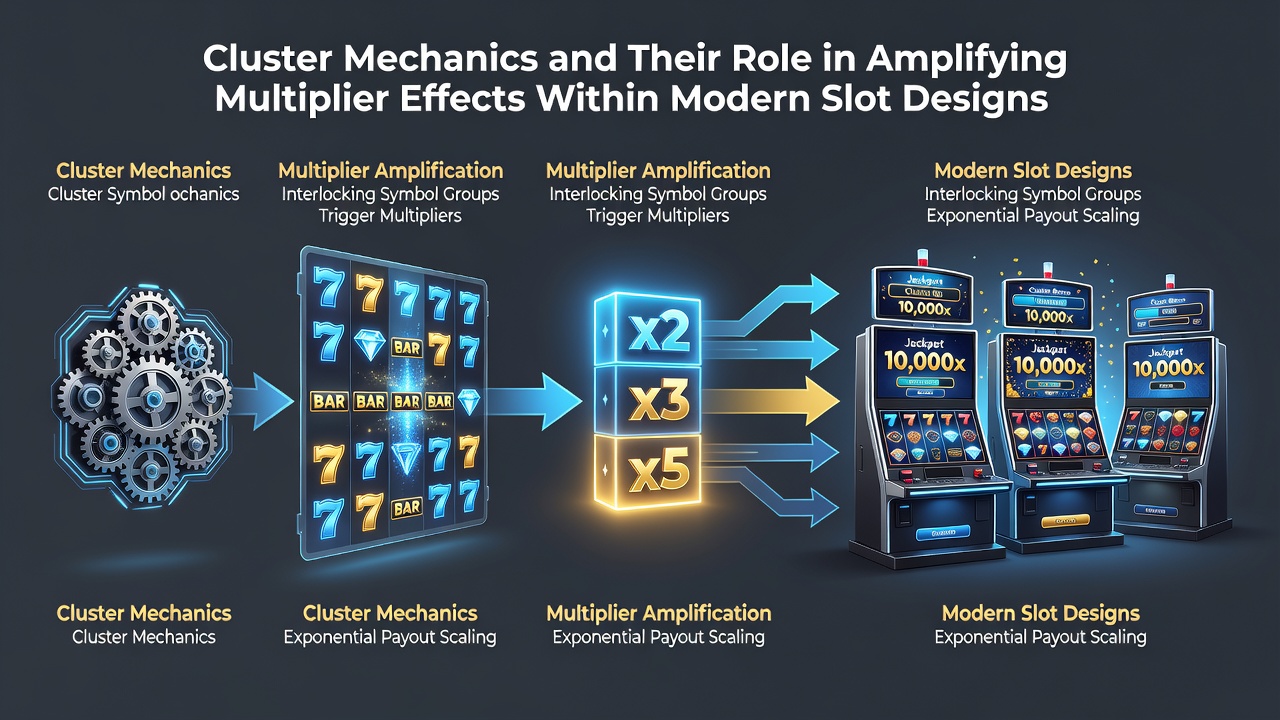
Multipliers in cluster designs activate through several routes, including persistent frames that collect values during cascades, random overlays that attach to specific symbols, and progressive meters that rise with each successive cluster removal. When a multiplier combines with a large cluster, the effect compounds because the base cluster payout multiplies first, then subsequent cascades apply the same or increased values. Observers note that this layered approach creates payout distributions where mid-sized clusters paired with growing multipliers account for a significant share of total returns in many sessions.
Technical Implementation in Current Releases
Developers program cluster grids at sizes such as 6x6 or 8x8 to accommodate more potential connections than standard 5-reel layouts, while collision detection algorithms ensure accurate grouping even when symbols fall at varying speeds. In June 2026 several studios updated existing engines to support hybrid cluster and payline modes within the same game, allowing players to toggle between formats without leaving the session. This flexibility stems from modular code structures that separate symbol evaluation from reel physics, reducing development time for new variants.
Research from the University of Nevada's gaming analytics group indicates that multiplier amplification peaks when cluster removals exceed four in a single spin sequence, because each removal increases the chance of landing higher-tier symbols that carry their own multiplier tags. Those patterns appear consistently across both mobile and desktop versions, confirming that the underlying mathematics remains stable regardless of platform.
Impact on Session Dynamics and Return Profiles
Cluster mechanics paired with multipliers alter volatility curves by concentrating larger outcomes into fewer spins while maintaining frequent small clusters that keep engagement steady. Figures from the Australian Communications and Media Authority's 2025 gaming review reveal that games featuring these combined systems posted a 12 percent increase in average bet duration compared with earlier non-cluster titles released in the same market. The change occurs because cascades extend playtime and multipliers provide visible progress toward bigger results.
Designers adjust symbol distribution tables to balance cluster frequency against multiplier rarity, ensuring that high-value multipliers appear often enough to influence player perception yet remain scarce enough to preserve overall return-to-player targets. This calibration relies on Monte Carlo simulations run across millions of spins before release, with final tuning based on regulatory testing requirements in multiple jurisdictions.
Future Development Pathways
Engine updates scheduled for late 2026 aim to introduce variable cluster shapes that change mid-session based on accumulated multiplier levels, creating adaptive grids where symbol connectivity rules evolve during extended play. Early prototypes demonstrate that these dynamic adjustments can shift payout emphasis from frequent modest clusters to occasional oversized ones when multipliers reach preset thresholds. Industry associations tracking these prototypes report that testing focuses on maintaining transparent probability displays so players receive clear information about how cluster size and multiplier values interact.
Conclusion
Cluster mechanics continue to serve as a foundation for multiplier amplification in slot designs by enabling extended sequences and layered value increases within single spins. Technical refinements in grid size, cascade logic, and multiplier triggers have allowed developers to maintain stable return profiles while introducing new interaction patterns. Data from regulatory bodies and academic sources confirm that these systems produce measurable shifts in session length and payout distribution, patterns that are expected to evolve further with upcoming engine updates.