Blending Paylines with Clusters: The Shift in Bonus Activation for Video Slots
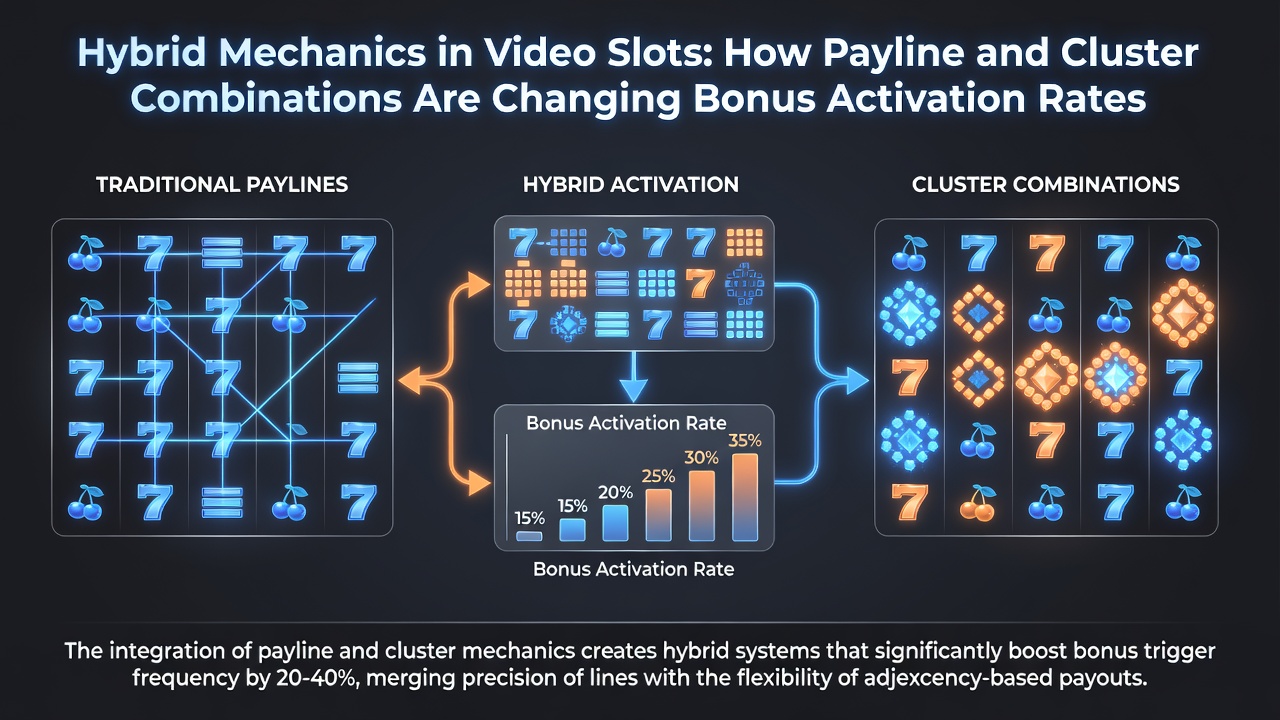
Hybrid mechanics in video slots combine traditional payline structures with cluster-based winning systems, and this approach has altered how bonus features activate across many titles released in recent years. Game developers integrate fixed or adjustable paylines alongside cluster formations where matching symbols group together regardless of linear paths, which creates new pathways for triggering free spins, multipliers, and other rewards. Data from industry reports indicate that these combined systems appear in an increasing share of releases since 2024, with activation rates for bonuses showing measurable differences compared to single-mechanism games.
Traditional Payline Systems Versus Cluster Pays
Payline mechanics require symbols to land on predefined lines that run horizontally, diagonally, or in zig-zag patterns across the reels, and players adjust bet sizes to cover more lines for higher activation chances. Cluster pays instead recognize groups of adjacent symbols in any direction, often needing five or more matches to form a win, while many titles now layer both systems into one reel grid. Observers note that when studios merge these elements, bonus triggers frequently depend on satisfying conditions from either method or both simultaneously, which expands the number of qualifying outcomes per spin.
Research from gaming analytics firms shows that hybrid titles recorded bonus activation rates between 12 and 18 percent higher than pure payline games in controlled testing environments during 2025. The increase stems from overlapping win conditions that allow symbols to contribute to both line-based and cluster-based requirements at once, and this overlap reduces the number of dead spins where no progress toward a bonus occurs. Figures from the Nevada Gaming Control Board reveal similar patterns in regulated markets where hybrid slots have grown to represent roughly 35 percent of new approvals by early 2026.
How Hybrid Combinations Influence Bonus Triggers
Bonus activation in hybrid slots often hinges on collecting specific symbols that count toward both payline completions and cluster formations, and this dual counting accelerates meter fills or scatter accumulations. For instance, a game might award free spins when three scatter symbols appear on any active payline or when a cluster of five identical symbols forms anywhere on the grid, and the presence of both rules means players encounter qualifying events more often. Studies conducted by the University of Nevada's gaming research department found that such layered conditions led to bonus rounds starting after an average of 68 spins rather than the 85 spins typical in non-hybrid formats.
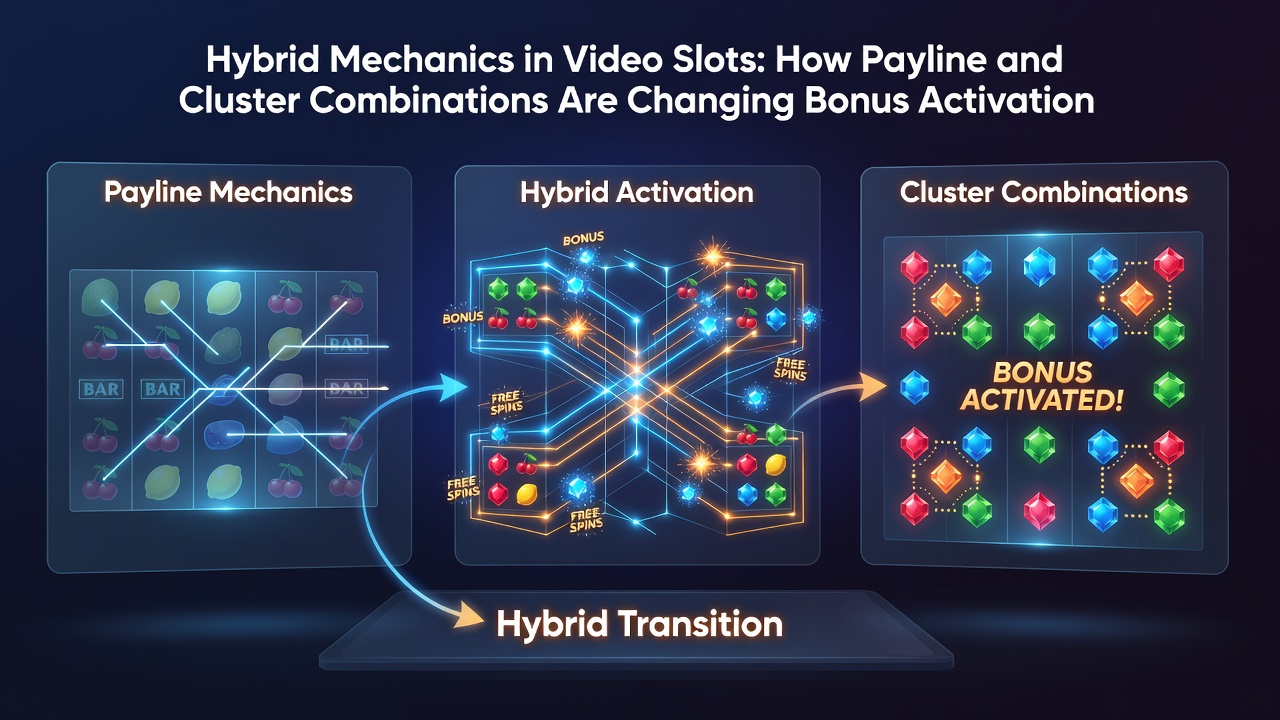
Developers adjust reel strips and symbol weights to balance these mechanics, and they frequently position high-value symbols so they can complete lines while also contributing to clusters. This design choice keeps volatility profiles stable even as activation frequency rises, and testing data collected through June 2026 confirm that return-to-player percentages remain within regulatory bands despite the added trigger paths. Those who analyze gameplay logs report that hybrid systems produce more frequent small bonuses alongside occasional larger ones, which spreads reward distribution across more sessions.
Regional Market Data and Implementation Trends
Regulatory filings from the Australian Communications and Media Authority document a steady rise in hybrid slot submissions, with 42 percent of new games incorporating mixed mechanics by the second quarter of 2026. These titles demonstrate bonus activation intervals that shorten by an average of 15 to 22 spins when cluster elements supplement existing paylines, and the pattern holds across both desktop and mobile platforms. Industry organizations such as the Interactive Games and Entertainment Association have published summaries indicating that player retention metrics improve when bonus events occur at these adjusted rates, though the reports focus solely on measured outcomes rather than causation claims.
Game mathematics teams calibrate the probability matrices so that the combined systems do not exceed target volatility thresholds, and they achieve this by reducing the frequency of certain symbol groupings while increasing others. The result appears in detailed payout tables that list separate activation probabilities for payline-only, cluster-only, and combined events, and these tables help operators understand expected bonus frequency before deployment. External audits conducted in multiple jurisdictions verify that the published rates align with actual performance across large sample sizes of spins.
Conclusion
Hybrid payline and cluster combinations continue to reshape bonus activation patterns in video slots, and available data through June 2026 show consistent increases in trigger frequency across regulated markets. Developers maintain balance through careful symbol weighting and probability design, while regulatory bodies track outcomes to ensure compliance with established standards. The mechanics expand qualifying conditions without altering core return-to-player frameworks, and ongoing analysis from academic and industry sources documents these shifts in activation rates across new releases.